
Webinar
Cybersecurity in Nursing Information Management
Livestreamed on Thursday, April 9, 2026
Registrants will receive an email with a link to access the webinar after completion of registration.
Cybersecurity in Nursing Information Management
$50.00
Bring this webinar to your team
We now offer institutional webinar licenses, making it easy to host a team viewing session for your staff, students, or colleagues. Reach out to operations@fnlm.org for details.
Overview
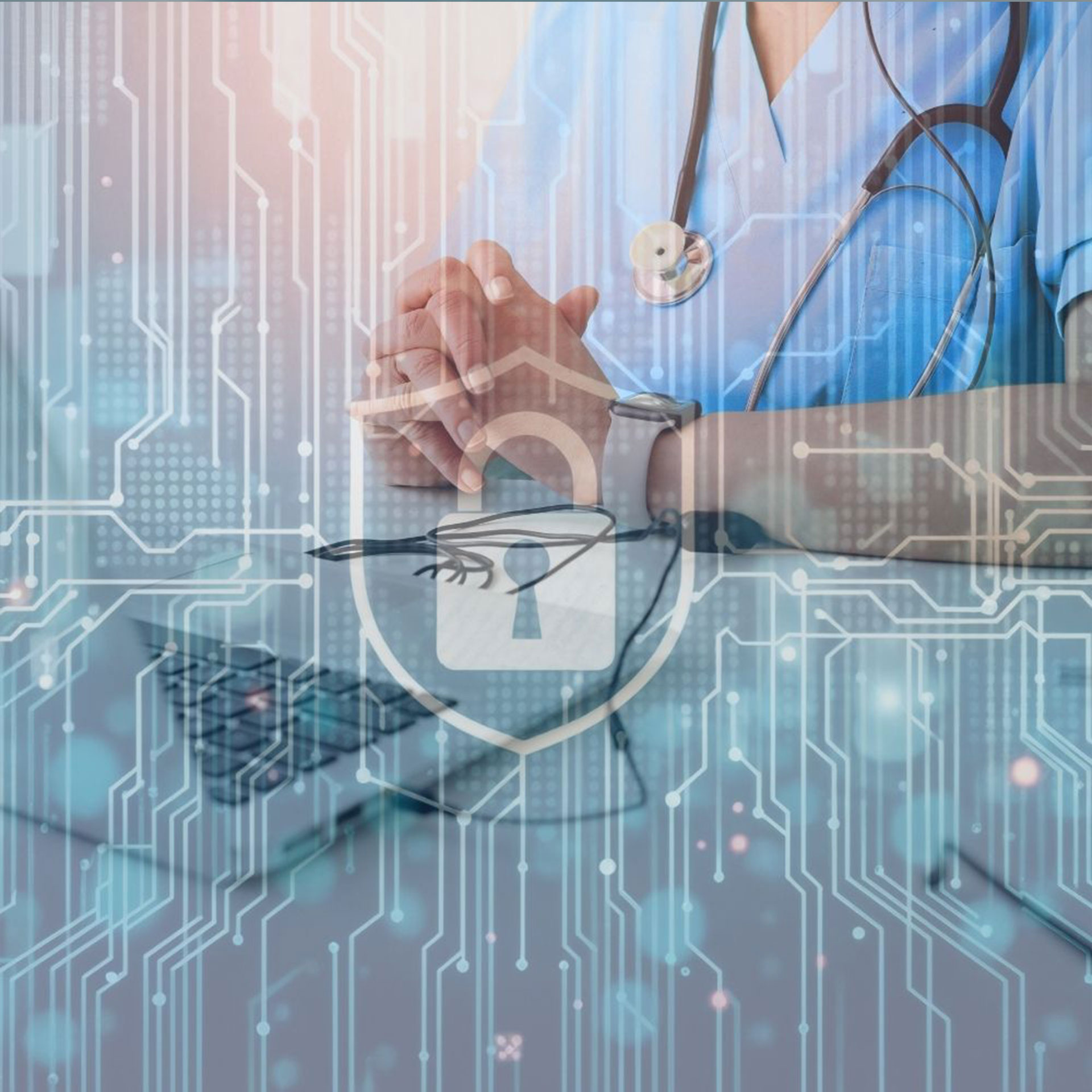
This session translates cybersecurity into practical, workflow-based actions nurses and nurse informaticists can apply at the bedside and at the governance level, spanning identity and access management, secure communication, device and data handling, downtime readiness, and incident reporting, aligned to the SAFER Guides, NIST Cybersecurity Framework 2.0 (NIST, 2024) and HIPAA Security Rule expectations for safeguarding ePHI. These presenters will advocate that Cybersecurity is a core component of safe, reliable care, helping protect nursing documentation, medication workflows, team communication, and continuity of care.
Thanks to our Sponsor:

Speakers
About this webinar
April 9 Webinar 1-2 PM
Speakers Katherine Taylor-Pearson and Steph Hoelscher
Abstract
Cyber events in healthcare are no longer “IT issues”, they are patient-safety events that disrupt nursing documentation, medication workflows, communication, and continuity of care. According to the IBM Cost of a Data Breach report (2025), the average cost of a U.S. data breach climbed to a record $10.22 million, a 9% increase from the prior year, largely attributed to rising regulatory penalties and higher detection and escalation costs. Given that healthcare remains a leading target for cyberattacks (Verizon, 2025), the implications for nursing information management are immediate and high-stakes, affecting both clinical operations and patient safety. As artificial intelligence becomes embedded in clinical tools and daily workflows, nurses must be even more vigilant: AI can accelerate learning, decision support, and research, yet it is also being leveraged by adversaries to scale and sharpen social engineering, phishing, and impersonation (e.g., deepfake voice/video) that target human trust and busy clinical environments (NIST, 2025). This session translates cybersecurity into practical, workflow-based actions nurses and nurse informaticists can apply at the bedside and at the governance level, spanning identity and access management, secure communication, device and data handling, downtime readiness, and incident reporting, aligned to the SAFER Guides, NIST Cybersecurity Framework 2.0 (NIST, 2024) and HIPAA Security Rule expectations for safeguarding ePHI. These presenters will advocate that Cybersecurity is a core component of safe, reliable care, helping protect nursing documentation, medication workflows, team communication, and continuity of care.
Learning Objectives
At the end of this activity, participants will be able to:
- Identify at least three high-frequency cyber threats that directly impact nursing information workflows, including AI-amplified social engineering (phishing, business email compromise, impersonation/deepfakes), credential misuse, and ransomware-related downtime.
- Apply workflow-level safeguards to protect ePHI across documentation and communication (MFA hygiene, secure messaging practices, device handling, and wrong-patient/wrong-recipient prevention).
- Describe core elements of cyber resilience for nursing operations (risk-analysis mindset, escalation/reporting pathways, and downtime documentation/reconciliation practices aligned to recognized frameworks).
References
Hasegawa, K., O’Brien, N., Prendergast, M., Ajah, C. A., Neves, A. L., & Ghafur, S. (2024).
Cybersecurity interventions in health care organizations in low- and middle- income countries: Scoping review. Journal of Medical Internet Research, 26, e47311.
www.doi.org/10.2196/47311
Hore, K., Tan, M. H., Kehoe, A., Beegan, A., Mason, S., Al Mane, N., Hughes, D., Kelly, C., Wells, J., & Magner, C. (2024).
Cybersecurity and critical care staff: A mixed methods study. International Journal of Medical Informatics, 185, 105412.
www.doi.org/10.1016/j.ijmedinf.2024.105412
IBM (2025). Cost of a Data Breach Report.
www.ibm.com/downloads/documents/us-en/131cf87b20b31c91
National Institute of Standards and Technology (NIST). The NIST Cybersecurity Framework (CSF) 2.0. (2024).
www.nvlpubs.nist.gov/nistpubs/CSWP/NIST.CSWP.29
NIST. Artificial Intelligence (AI) Spoofing (deepfakes/voice spoofing overview (2025).
www.nist.gov/system/files/documents/2025/05/08/IHS_PosterorBrochure_attachment
NSA, FBI & CISA. Contextualizing Deepfake Threats to Organizations (Cybersecurity Information Sheet). (2023).
www.media.defense.gov/2023/sep/12/2003298925/-1/-1/0/csi-deepfake-threats
Office of the National Coordinator for Health Information Technology. (2025).
SAFER Guides. U.S. Department of Health and Human Services.
www.healthit.gov/clinical-quality-and-safety/safer-guides
Verizon. 2024 Data Breach Investigations Report (DBIR). (2025).
www.verizon.com/business/resources/Te02/reports/2025-dbir-data-breach-investigations-report
Moderated by:

Kathleen McCormick, PhD, RN, FAAN, FACMI, FHIMSS
Participants:

Katherine Taylor-Pearson, DNP, RN, NI-BC, CDH-E, CLSSBB, CPBI, CPHIMS, CKM
President, American Nursing Informatics Association

Steph Hoelscher, DNP, RN, NI-BC, AIMP, CPHIMS, CHISP, FHIMSS
Professor of Graduate Informatics and MSN Informatics Program Director
Texas Tech University Health Sciences Center