
Advancing Health Through Knowledge
Webinar
Publishing in Specialized and Generalist Scientific Data Repositories
Livestreamed on: Wednesday, February 8, 2023
Publishing in Specialized and Generalist Scientific Data Repositories
ADVANCED METHODS OF DATA SCIENCE IN BIOMEDICAL RESEARCH
$0.00
Electronic data repositories represent some of the newest channels of publishing scientific research results, often in conjunction with manuscript submission. Attendees should get an overview of the selection of the most significant and trusted research data repositories, and also specific recommendations regarding when, and where to publish research data and evidence using repositories.
Moderator:

Chris Shaffer, MS, University Librarian and Assistant Vice Chancellor for Academic Information Management, University of California, San Francisco
Chris Shaffer joined UCSF as University Librarian, Assistant Vice Chancellor for Academic Information Management, and Adjunct Professor, Department of Medicine, in August 2017. Previously, he was University Librarian and Associate Professor at Oregon Health & Science University (OHSU) for nine years. He has helped plan interprofessional education initiatives and worked with research offices and Clinical and Translational Science Award centers to develop new library services for researchers. At OHSU, he worked with Dr. Melissa Haendel to found the Ontology Development Group. A leader in the Orbis Cascade Alliance, Chris was a champion for the library consortium’s migration to a Shared Integrated Library System. Chris is an active member of the Medical Library Association, where he recently finished a term as Treasurer on the Board of Directors, and is a Distinguished Member of the Academy of Health Information Professionals.
Plenary:

Publishing in Specialized and Generalist Scientific Data Repositories: Stephen Sherry, PhD, Acting Director, National Center for Biotechnology Information, National Library of Medicine
Dr. Sherry oversees a large suite of online resources for biological information and data, including the GenBank® nucleic acid sequence database and the PubMed database of citations and abstracts for published life science journals. He is also responsible for developing and operating all NCBI production services, with program areas spanning literature, sequences, chemistry, clinical research, and medical genetics.
Panel:

Jerry Sheehan, Deputy Director for Policy and External Affairs at the National Library of Medicine
Jerry Sheehan provides executive guidance and counsel to the NLM Director on all matters, with particular attention to NLM’s many policy and external engagements. He leads efforts across NLM, NIH, and the federal government to advance open science and enhance public access to the results of NIH-funded research, including scholarly publications, preprints, and data. Mr. Sheehan has twice served on detail to the White House Office of Science and Technology Policy, leading administration efforts related to open science, scientific integrity, scientific collections, and medical imaging. Before joining NLM, Mr. Sheehan directed work on international science and innovation policy at the Organization for Economic Cooperation and Development and on computing research and internet policy at the National Academy of Sciences. Mr. Sheehan serves as co-chair of the National Science and Technology Council Subcommittee on Open Science; vice-chair of the OECD Working Party on Innovation and Technology Policy, and U.S. delegate to the G7 Open Science Working Group. He holds BS and MS degrees in Electrical Engineering and Technology & Policy, respectively, from the Massachusetts Institute of Technology.

NIH ODSS GREI Initiative: Ishwar Chandramouliswaran, National Institutes of Health
Ishwar Chandramouliswaran is a lead program director in the Office of Data Science Strategy (ODSS) at the National Institutes of Health’s (NIH). He provides leadership, strategic guidance, and coordination of trans-NIH FAIR data science programs driven by researcher needs and emerging technologies. They include adoption of FAIR data principles, initiatives to establish a modernized biomedical data and repository ecosystem, as well as establish community partnerships to enhance education, adoption, and implementation of FAIR practices.
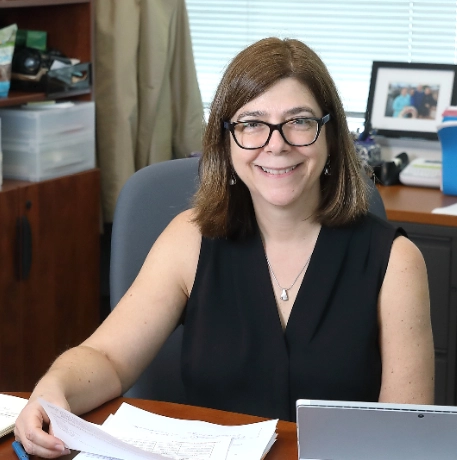
Sequence Data Repositories: Kim Pruitt, PhD, Chief, Information Engineering Branch, National Center for Biotechnology Information
National Library of Medicine
Kim Pruitt is the Chief of NCBI’s Information Engineering Branch, in the National Library of Medicine. She’s been at NCBI for nearly 25 years now, where she first developed the RefSeq product, and now manages NCBI’s public literature and molecular biology data services including ClinicalTrials.gov, PubMed, GenBank, SRA, and more. She earned her PhD at Cornell in Genetics and Development then did her first postdoc at the Boyce Thompson Institute studying the genetics of tryptophan biosynthesis in a plant model organism. She subsequently founded a small (but short-lived) start-up company that specialized in laboratory data management systems, and did a second post doc at NCBI focused on developing one of the first microarray’s to identify human gene expression, before joining as staff.

Generalized Repository Dataverse: Sonia Barbosa, BA, BSN, Manager of Data Curation for the Harvard Dataverse, and Manager of the Murray Research Archive, Harvard University
Sonia Barbosa is the Manager of Data Curation for the Harvard Dataverse, and Manager of the Murray Research Archive. Her responsibilities include initiating outreach and acquisitions of data for Harvard Dataverse, and promoting the use and benefits of the Dataverse tool and the Harvard Repository. Sonia leads training on using Dataverse, consults with users on organizing, cleaning, and preparing data for sharing and preservation, and provides curation support and guidance for users of the tool.
Sonia also manages the data housed at the Murray Archive, a human subjects social science data archive housing longitudinal data on the lives of women. She is responsible for curation of the collection, preservation of data related to the archive, and data processing and dissemination.